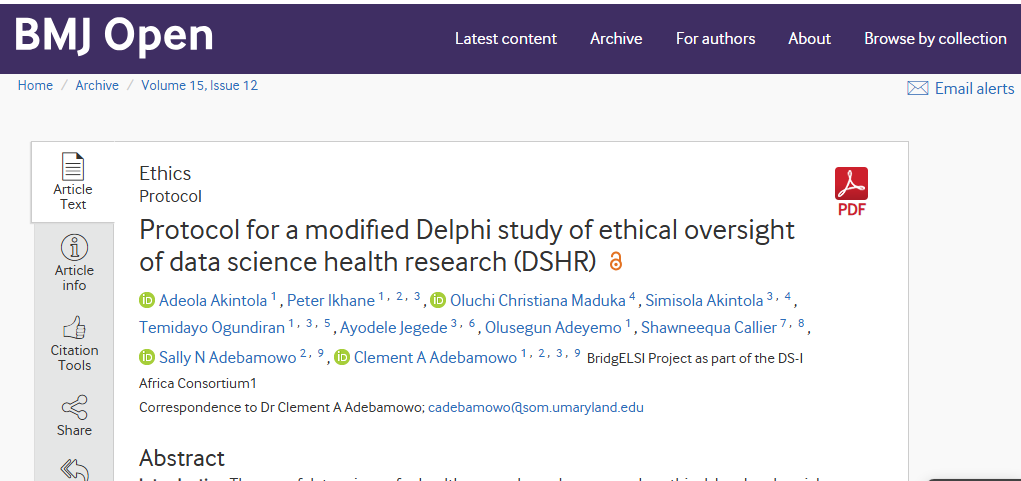
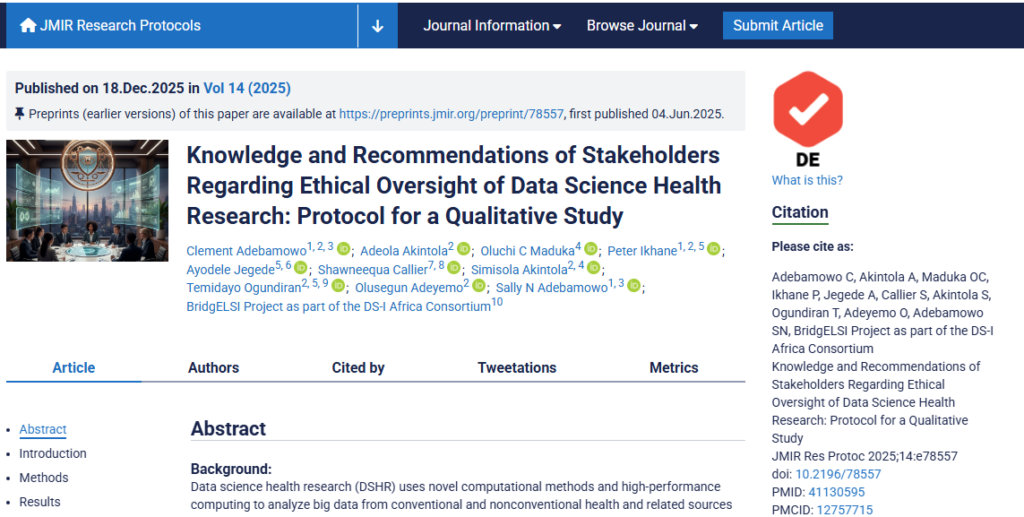
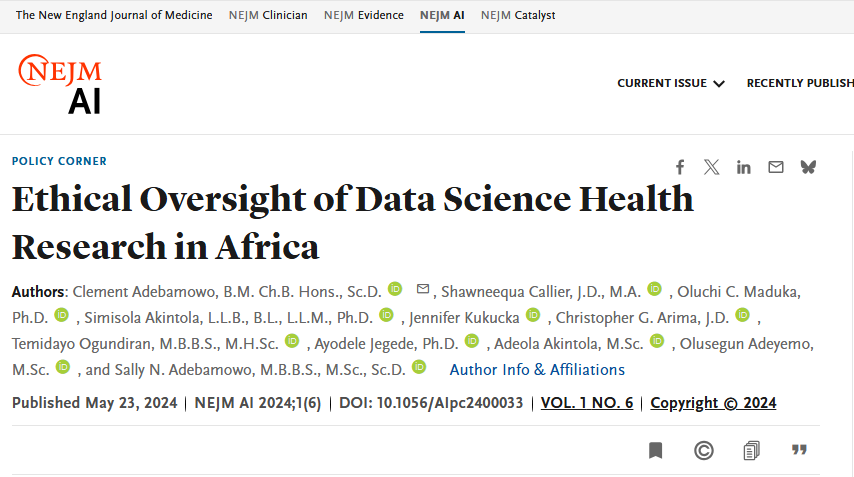
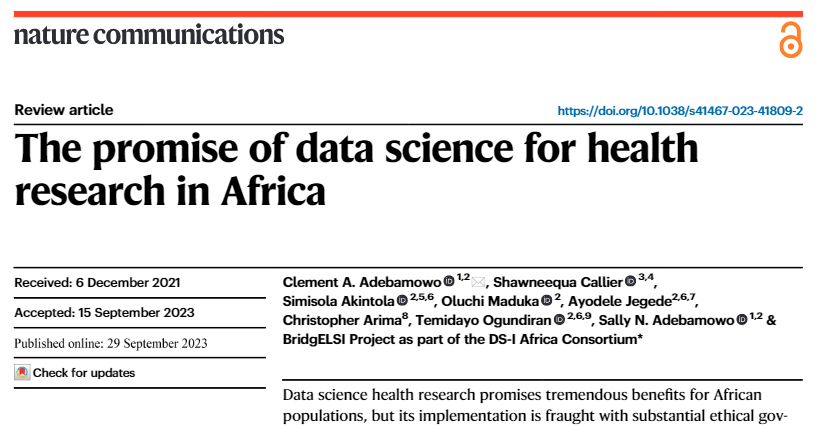
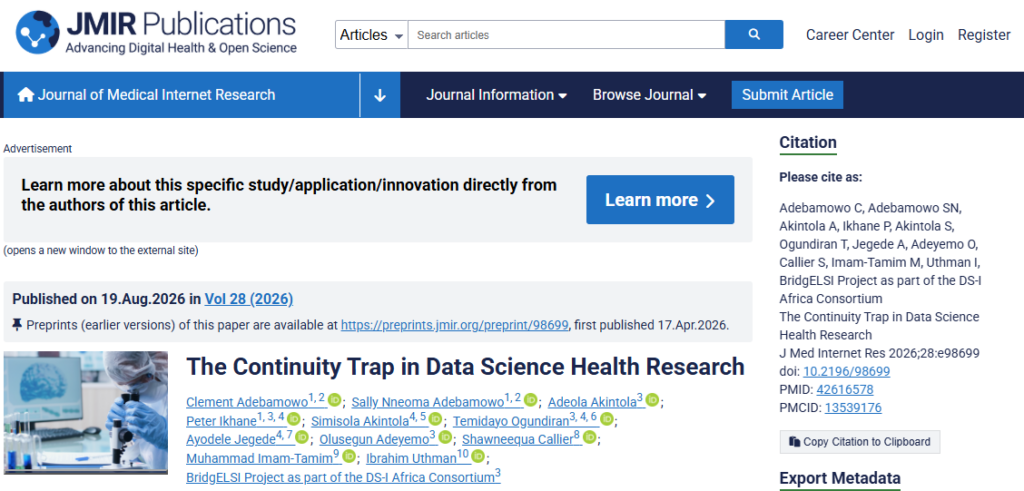
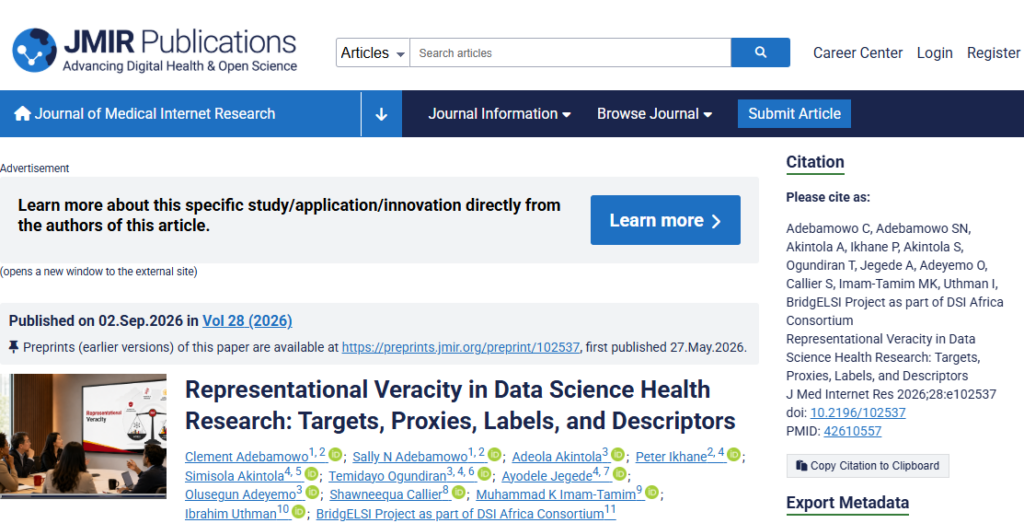
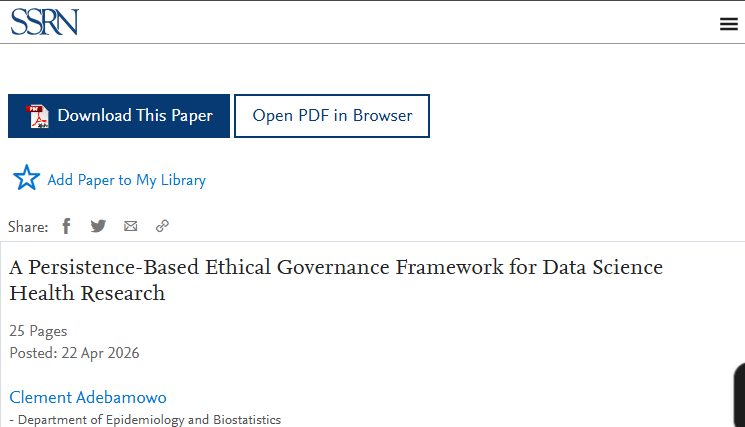
The project is generating a growing body of scholarly and knowledge outputs that reflect both its scientific rigor and practical relevance. In addition to academic publications, the project has contributed tools, datasets, training resources, and collaborative frameworks designed to translate findings into actionable recommendations for researchers, practitioners, and policymakers.
The population survey is the second aim of the BridgELSI project, designed to prospectively assess the knowledge, attitudes, and practices (KAP) of key stakeholders on the ethical, legal, and social implications (ELSI) of data science health research in Nigeria.
The BridgELSI research group is examining how ethics can be systematically integrated into biomedical and data-driven/AI health research rather than treated as an external add-on. The project focuses on identifying, analyzing, and comparing different models of embedding ethics across the lifecycle of biomedical and data science health research, including design, data generation, analysis, and dissemination.
As data science health research (DSHR) expands globally, there is a growing need for governance frameworks that reflect the diverse cultural and religious contexts in which this research takes place. In Nigeria, where about half of the population identifies as Muslim, the BridgELSI project is working to develop ethical oversight mechanisms that incorporate Islamic ethical principles alongside international research standards.
The need for governance frameworks that reflect indigenous philosophical traditions and values cannot be overemphasized. Hence, in the BridgELSI project, we are exploring how customary law could help strengthen ethical oversight of DSHR with special focus on Yoruba Customary Law. The Yoruba is one of the three leading tribes in Nigeria.
©2026 Center for Bioethics and Research | All rights reserved